

Free Dropshipping Profit Calculator
What is Dropshipping Profit Calculator?
A free Dropshipping Profit Calculator that works as both a dropshipping price calculator and dropshipping margin calculator — enter your costs, fees, and selling price to instantly see your true profit per order. Built for sellers who need accurate numbers before launching any product.
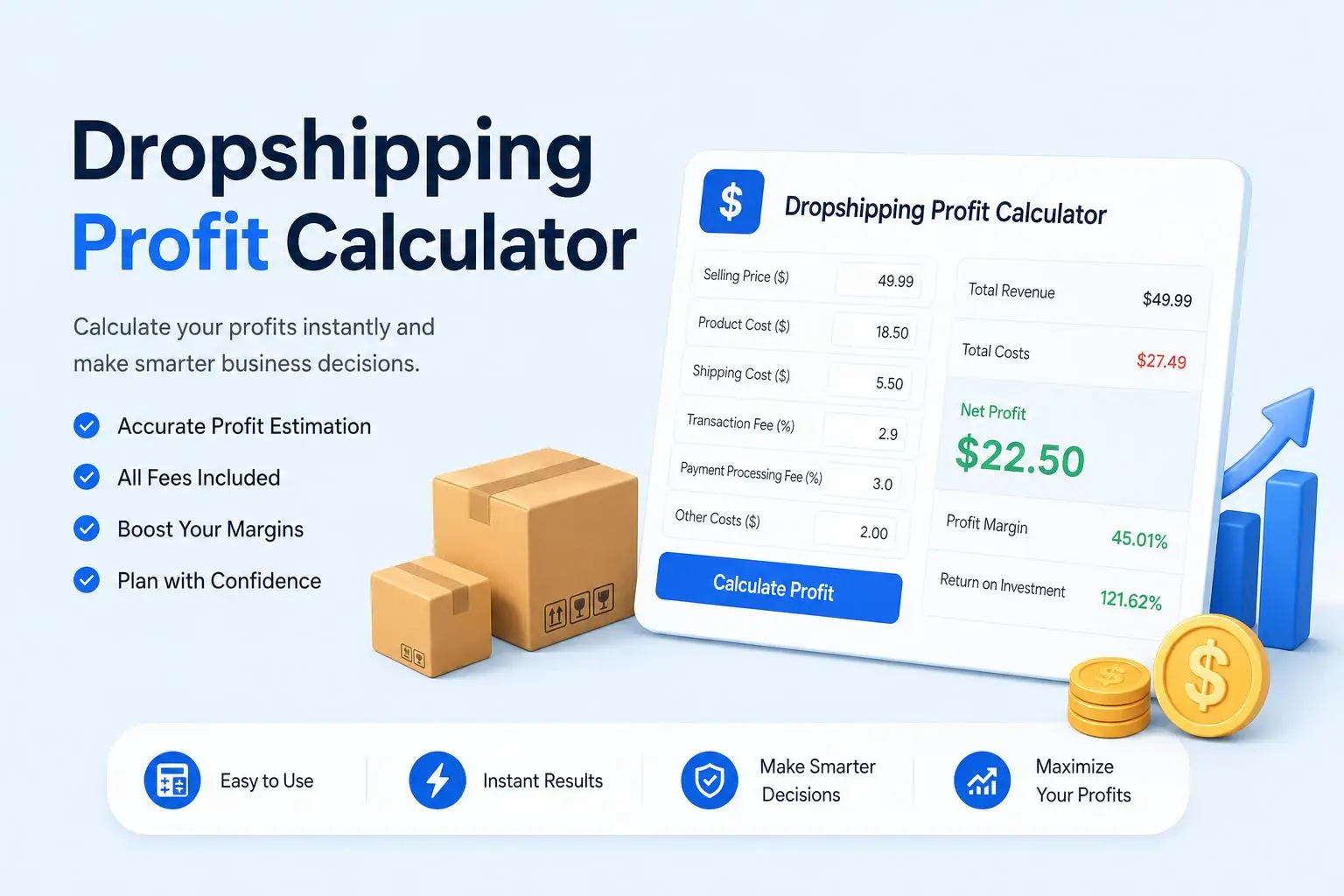
Why Use Our Dropshipping Profit Calculator?
100% Free Forever
Our Dropshipping Profit Calculator is free forever — no account, no credit card, no usage limits.
All Cost Inputs
Factor in product cost, shipping, ad spend, and platform fees for true profit per order, not rough estimates.
Instant Profit Results
See your profit margin and net profit the moment you input numbers — no formulas or spreadsheets needed.
Test Pricing Scenarios
Adjust costs and selling price on the fly to find the most profitable pricing strategy for any product.
How to Calculate Dropshipping Profit?
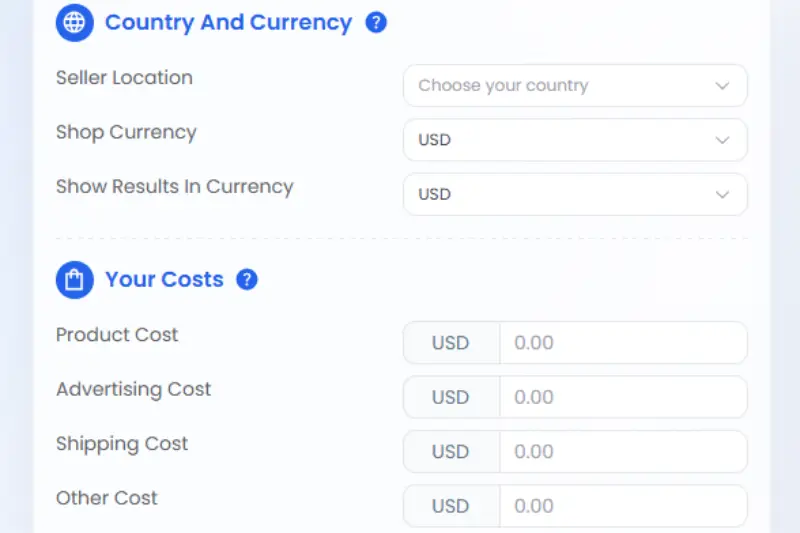
Step 1: Enter Costs
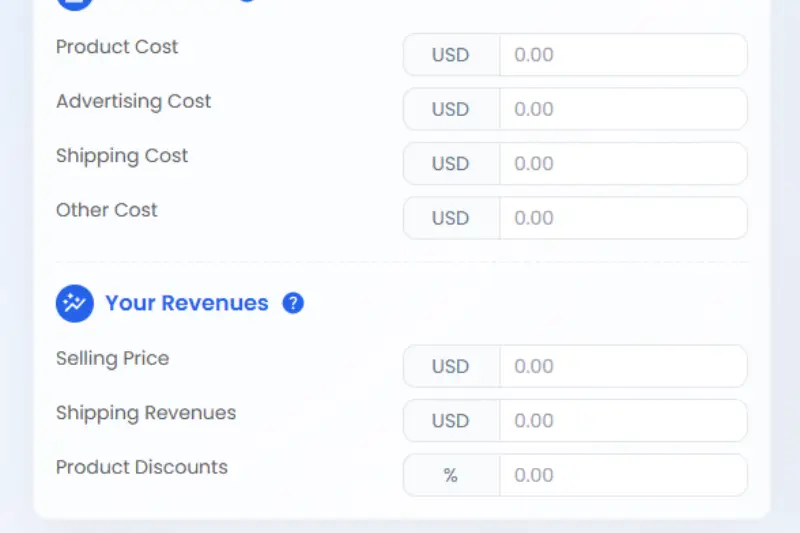
Step 2: Set Price
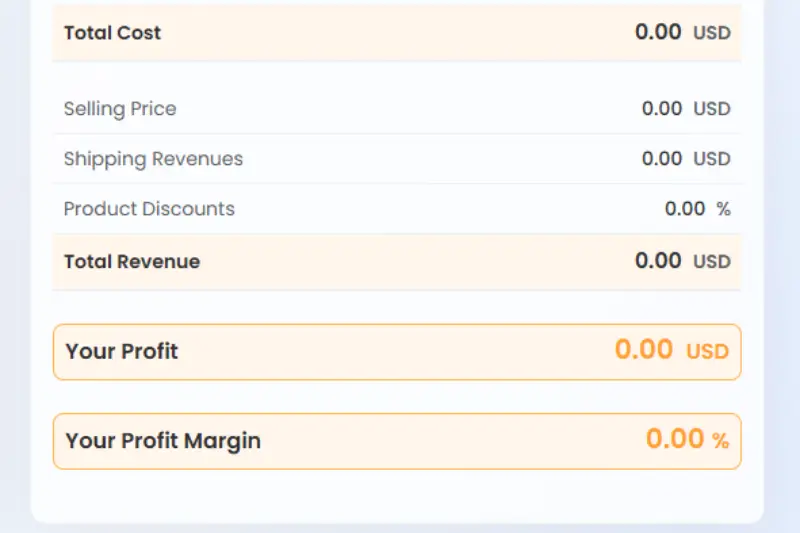
Step 3: View Results
Calculate Your Dropshipping Profit Now — Free!
Stop guessing your margins! Our free Dropshipping Profit Calculator delivers accurate numbers in seconds. Enter your costs, set your price, and find winning products today.
What Users Say About Dropshipping Profit Calculator?

James R.
Dropshipping Store Owner

Laura T.
E-commerce Marketer

Kevin S.
Shopify Seller